
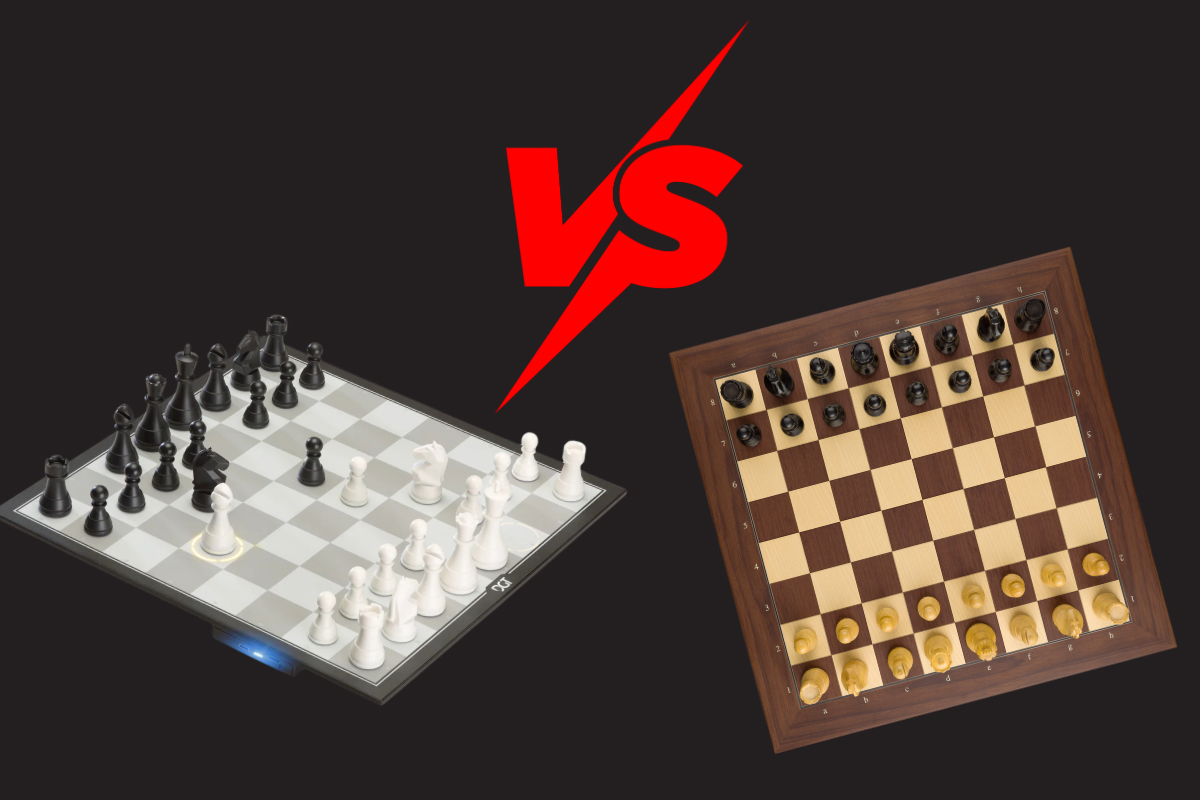
Electronic vs Traditional Chess Boards: Which Should You Buy?
Chess boards fall into two broad categories these days: traditional boards, where the game exists entirely on the table in front of you, and electronic boards, which sense every move and connect to software, apps or a chess computer. Neither is objectively "better" they suit different goals. Here's how to work out which one is right for you.
The Core Difference
A traditional board is exactly what it sounds like: a board and a set of pieces, nothing more. You move pieces, you think, you play the same experience chess has offered for centuries.
An electronic board adds a layer of technology underneath that surface. Sensors detect where each piece sits, so the board can record your moves, sync with an app, connect to online play, or power a standalone chess computer for solo practice against adjustable difficulty levels.
When a Traditional Board Is the Right Choice
A traditional set makes the most sense if:
- You're learning the fundamentals. New players benefit more from repetition and simple, distraction-free practice than from any added technology. A complete starter set with board, pieces (and often a basic clock included) is genuinely all you need to begin.
- You mostly play with other people, in person. If your chess happens across a kitchen table, at a club, or with family, a traditional board does everything you need without any setup or charging.
- Budget matters. Traditional sets are significantly cheaper than electronic equivalents, since you're not paying for sensors or connectivity.
- You want something as a gift or display piece. A well-made wooden board, like those from Ferrer, is as much a piece of craftsmanship as it is a game something to be enjoyed sitting on a table, not just played on.
When an Electronic Board Is the Right Choice
An electronic board is worth the extra investment if:
- You want to play solo. Pairing an electronic board with a chess computer lets you play against an adjustable AI opponent whenever you like, without needing a second person in the room.
- You want to review and improve your game. Automatic move recording means you can go back over a game afterwards and see exactly where things went right or wrong something impossible to do reliably by memory alone.
- You're involved in running or broadcasting matches. Tournament organisers and clubs use electronic boards to live-broadcast games, since the board itself feeds the moves directly to a screen or stream.
- You're already a committed player. The value of the technology scales with how often you play for a once-a-month casual game, it's overkill; for daily practice, it can genuinely accelerate improvement.
What About Price?
As a rough guide: traditional starter sets sit at the affordable end, since you're buying a board and a set of pieces with no electronics involved. Electronic boards cost meaningfully more, reflecting the sensor technology and (in some cases) computer hardware bundled in. If you're not sure which side of that gap makes sense for your budget, it's worth starting traditional and upgrading later plenty of players do exactly that once they know chess is a hobby they'll stick with.
Can You Have Both?
Yes! and many serious players do. It's common to keep a traditional board (often a nicer wooden one) for in-person games and a separate electronic setup for solo practice, online play, or reviewing games. They're not mutually exclusive; they just serve different moments in how you play.
Quick Decision Guide
Choose traditional if: you're a beginner, play mostly in person, are budget-conscious, or want a board that doubles as a beautiful object.
Choose electronic if: you want to play solo against a computer, need to record/review games, or are involved in club or tournament broadcasting.
Still not sure? Get in touch and tell us how you play, we're happy to point you toward the right board rather than the most expensive one.
Share:
Chess Gifts for Every Budget (2026 Guide)
The 46th Chess Olympiad 2026: Everything UK Chess Fans Need to Know