
The Game Was Born
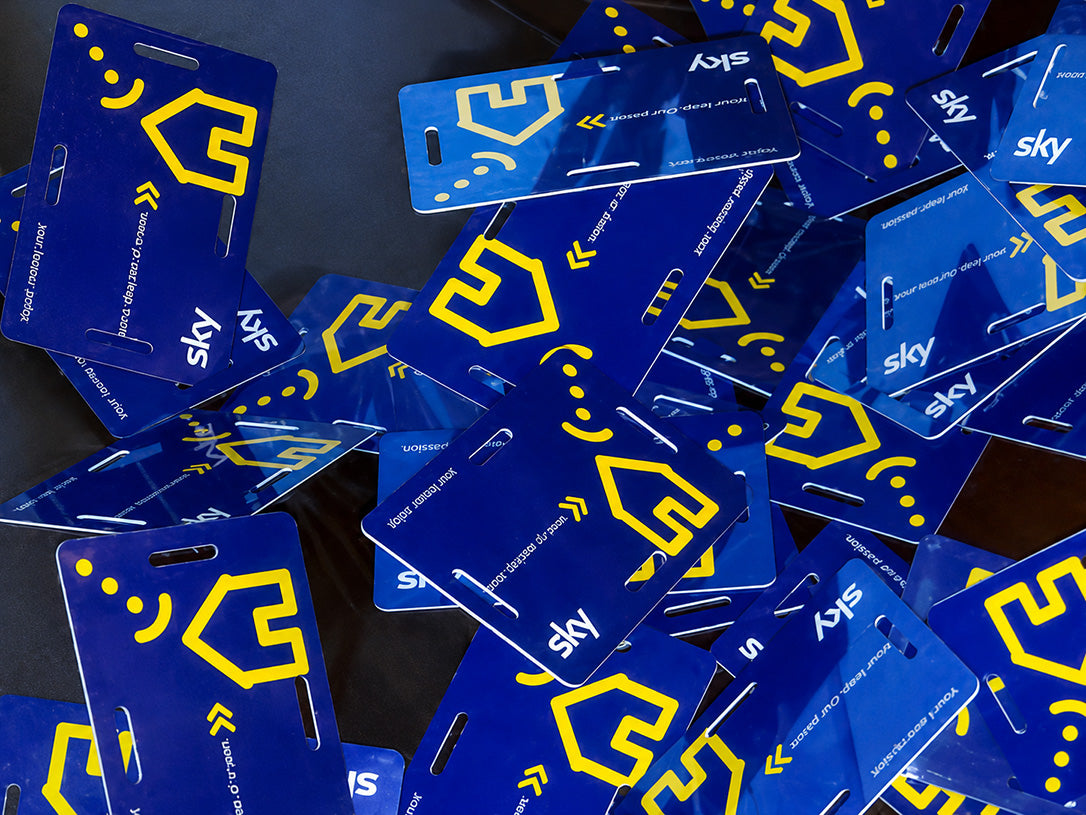
It all started back in 2010/11 when I was supplying SKY cards to the military over in Europe. There was a big change in the SKY cards in that they changed to the current white ones from the Blue. This meant that I ended up with loads of Blue cards when they got replaced.
I was sitting in my home office with a cup of coffee and in an idle moment started punching slots in a few cards with an ID card punch.
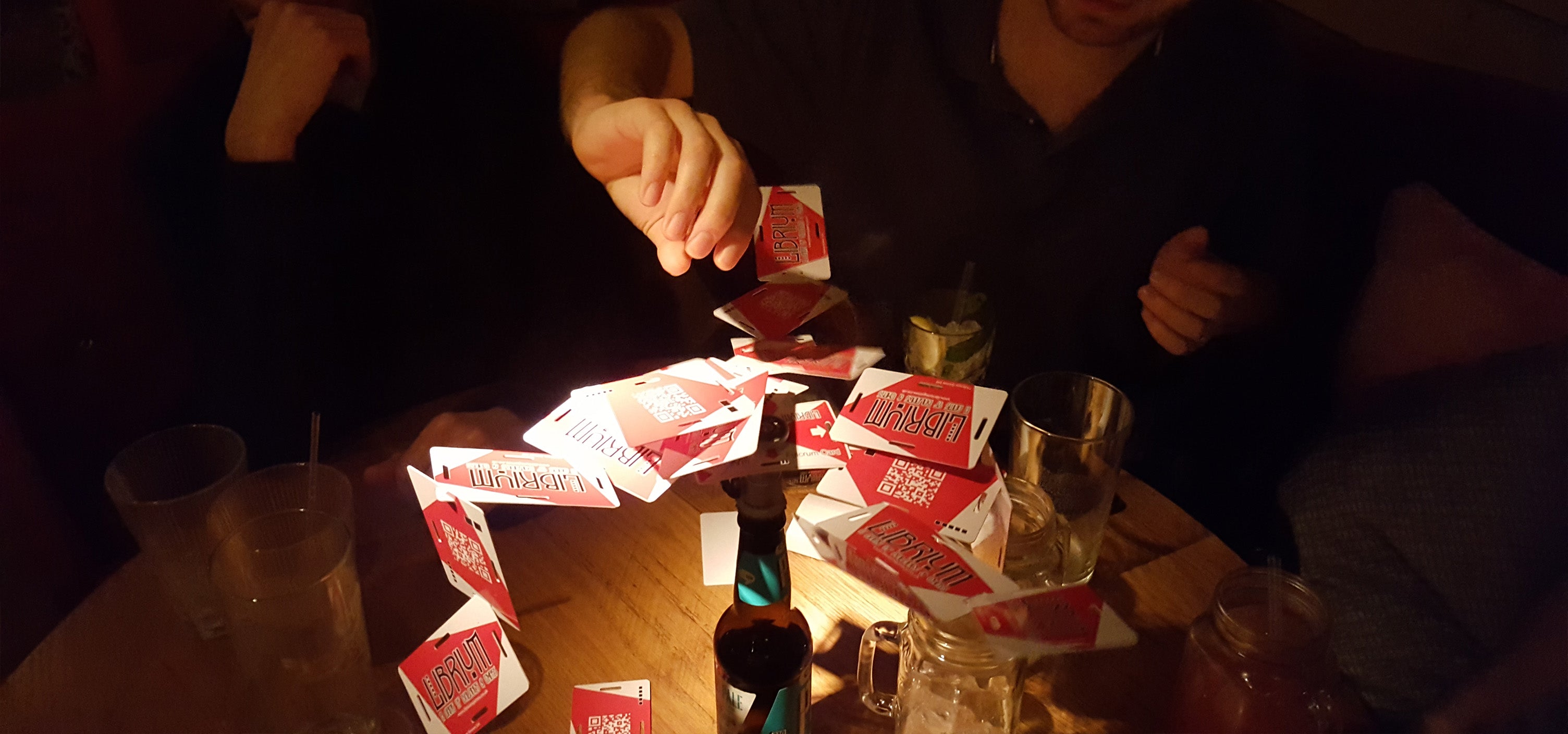
I casually built a base with 3 cards and then started adding the cards as we do now with Cards v Gravity.
This is when I had my eureka moment and called my son in to take a look… we both then played the first ever Librium game with no rules.
The game was born!
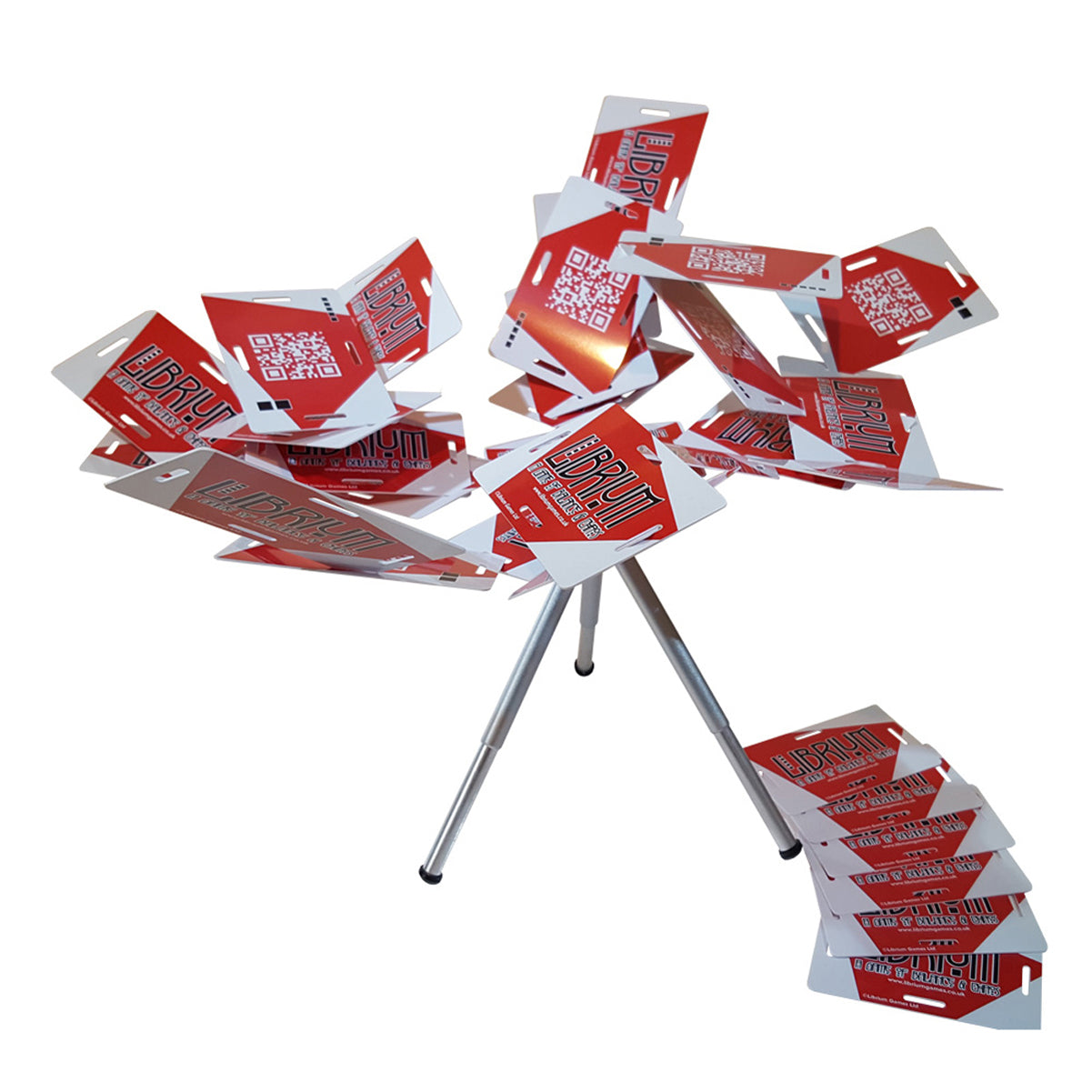
This was the first model almost done which included 20 building cards and 5 base cards and was called Librium Lite.
I soon found that the cards when stacked on top of each other soon compressed the base cards to the point where a spread of cards would touch the table.
This then necessitated a way of lifting the cards away from the table to allow more space to build.
You would have thought that I would have gone straight for the tripod version… not so, this is when I came up with the hanging version or Pro version.
The First Pro Version
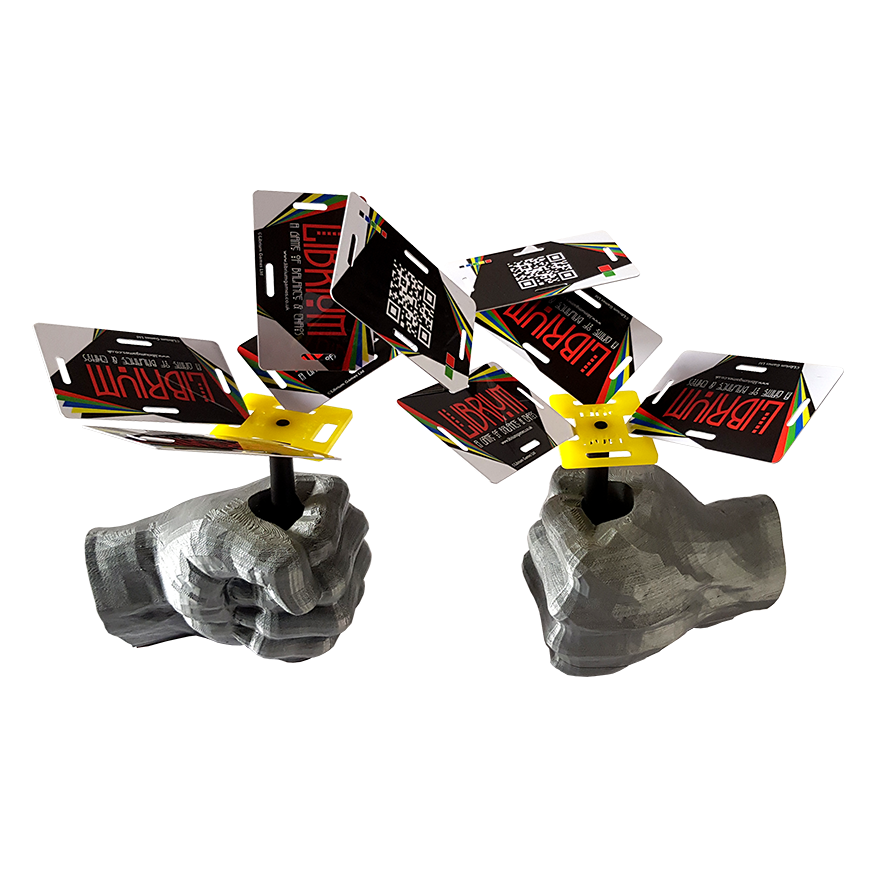
The first Pro version used a cast iron microphone stand with a strategically bent 1 metre long length of aluminium rod as the means to which a hanger rod could be suspended. This worked very well especially when used with a spring. There were however a couple of issues.
A. If the structure had too many cards on it, the base would simply tip over or the cards would once again touch the table if a long run was made.
B. A bending template would be required if the game was retailed. (At this point I was selling into pubs only and arranging tournaments)

Librium Lite+ / Pro2
Thinking for a solution, I then developed the tripod version which I called the Librium Lite+ (meaning the Lite version with the addition of the tripod).This was great for retail and the tripod could accommodate 30 cards too.
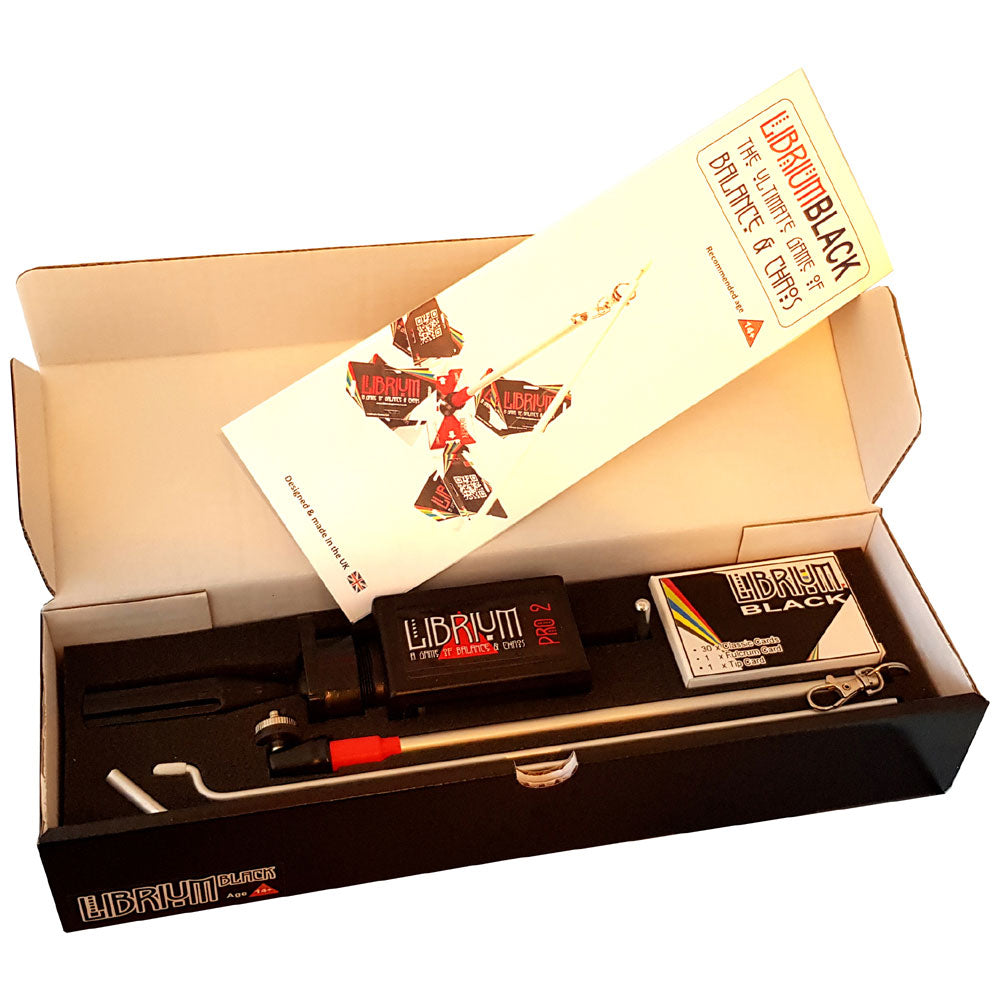
Although the Lite+ version was selling well, people were still interested in the Pro version, so eventually I came up with the idea of reducing the 1m long aluminium rod in to a two part assembly along with the a table clamp.
This enabled easy packing and reduced weight.
At this point I realised that I didn’t have the necessary expertise to break into the general toy/game market in a big way, so had my first meeting with an expert Toy/Game licence agency in June 2011, who excitedly offered me a deal which meant me paying them to re-design and market the game from which I would then get a royalty.
After a few years and £2,500 later, there version of the game called Bonzai had hit the trade fairs with no success.
Their version used little plastic clips to add the cards as well as the slots and it all looked like a tree with extra rules.
This is where I think they lost the simplistic essence of the game, trying to make it more complicated for the sake of it!
I think the agency went under in the end, because I found it more and more difficult to get hold of them until they vanished.
Conquering America & Canada
Not long after this episode I came across a US Licence agent who normally charges a fee but offered to take the game on for free!
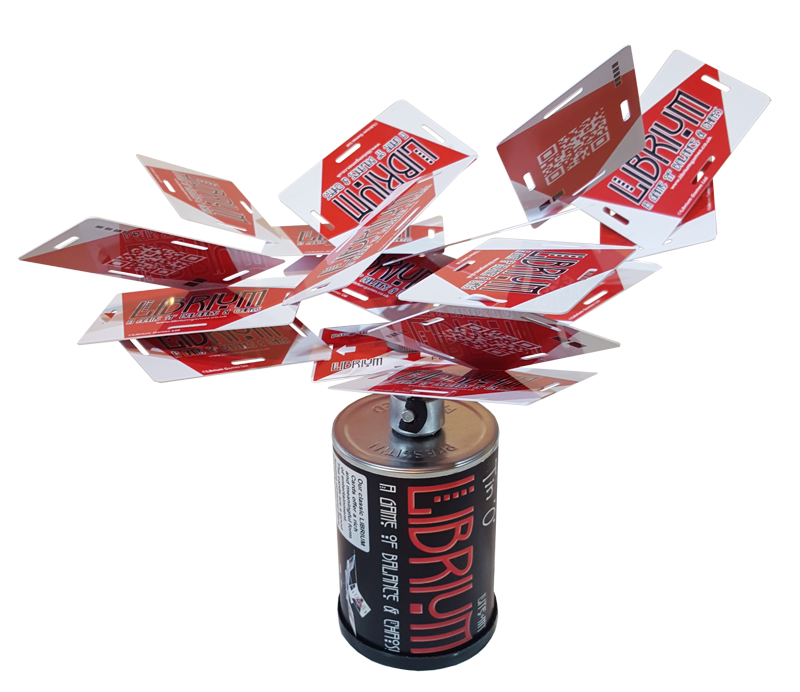
The American market at this time were more and more interested in being able to stack products, especially in tins, so this gave rise to the tinned version of Librium, the Lite+MT (denoting the addition of the mag-mount and tin). This resulted in interest from The Canadian Group who struck a deal in 2014.
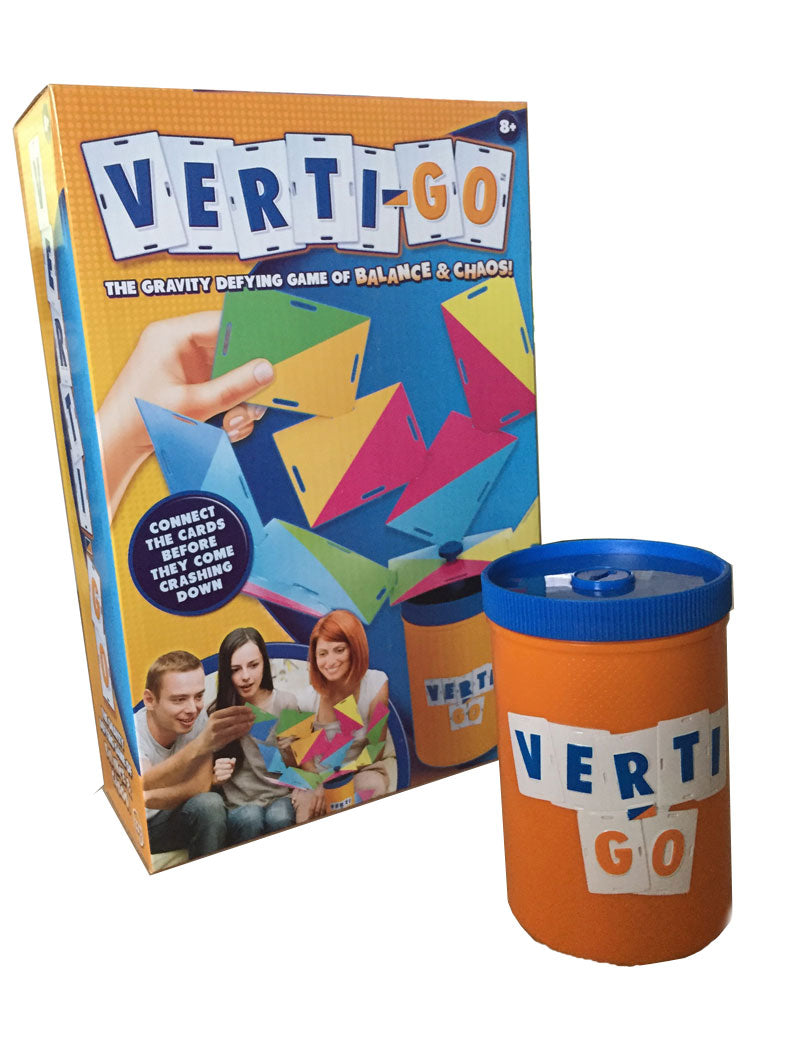
TCG’s version became ‘Verti-Go’, which started to sell well until the demise of Toys R Us, when they eventually defaulted back to their core products.
The Lite+M turned out to be a scaled down version of the Lite+MT, being cheaper without the tin.
Hasbro were interested at one point… (even the president of Hasbro requested a Pro2 for his own collection which he paid for!)
Eventually with little or no sales coming through TCG, I pulled the plug citing breach of contract in 2017 and we mutually called it a day.
At the same time that TCG were defaulting on the agreement, I had also struck up a deal with a Japanese company following the UK Games Expo show.
Language and time zone issues were clearly an issue here and it was almost impossible to get any kind of dialogue going with them after the contract was signed.
Consequently things fell through but they did manage to manufacture a Japanese version of the game.
Back To The UK
Following the demise of the Japanese and Canadian agreements in 2019, my US Licence agent managed to strike a deal with a Californian company called Ultra Pro.
This venture never really materialised because the Covid situation and the Suez Canal ship issue really messed up the US supply chain.
Librium Yellow was sold successfully at the Tabletop Gaming Live show in Manchester, but finding components at the right price to build more had also become more of an issue.
So… Finally I ended up signing a deal with Big Potato Games.
This came about by my trade customer (Awesome Games of Hebdon Bridge), telling Big Potato Games how good the Librium Blue version was, and maybe it was a game they could get behind!
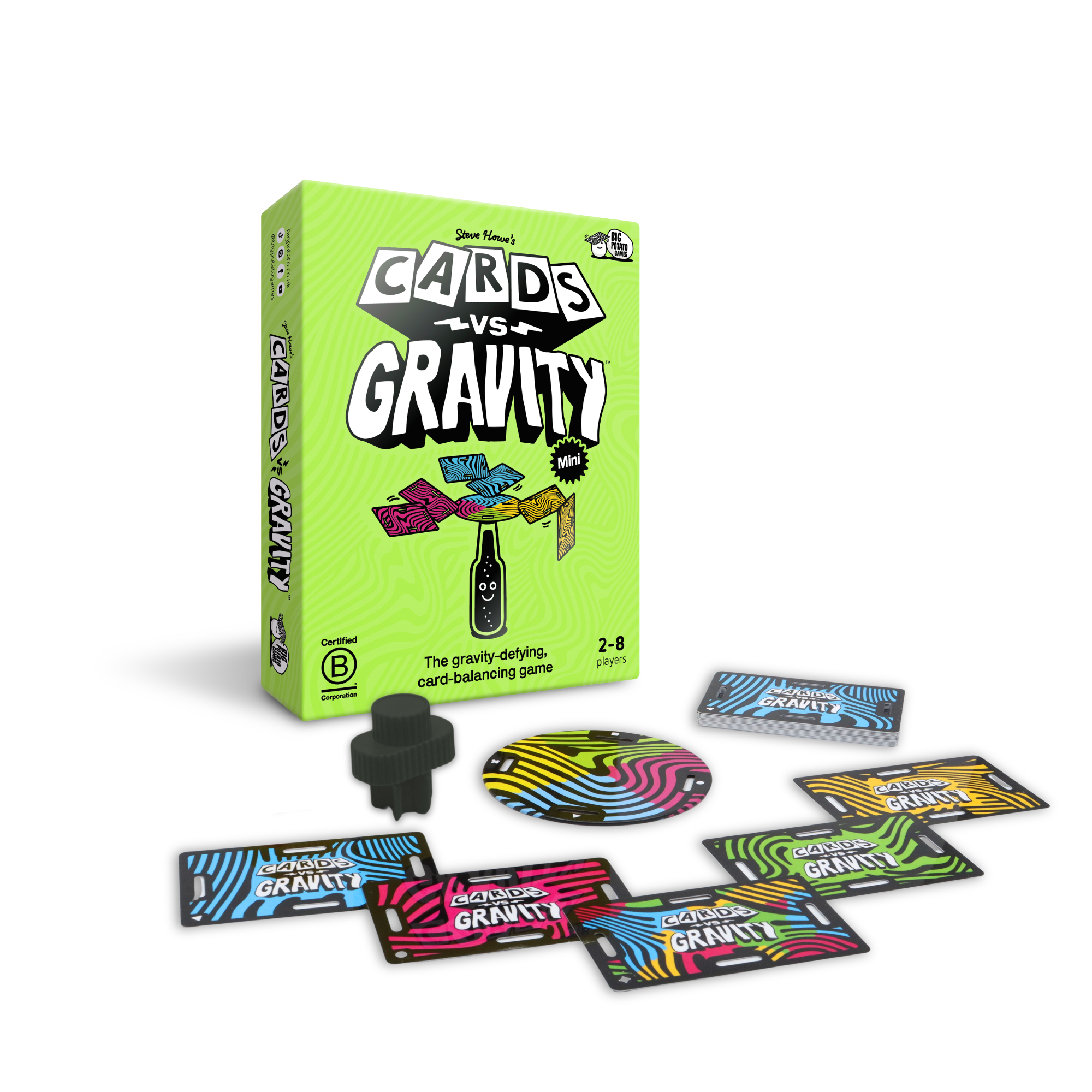
The result is Cards v Gravity and is available in the store.
If you look closely, you will see my name above the title graphic!
The rest they say is history!
But after all these different versions of the original concept, the one that I constantly get asked for is Librium Black.
This was the one game that really highlighted the card balancing concept which led to a number of pub tournaments and even a World Championships which necessitated the use of a timer, which is where DGT came in to the equation with their Cube, game timer.
Maybe Big Potato Games will give the 'Black' version a go in the future!
Steve Howe.